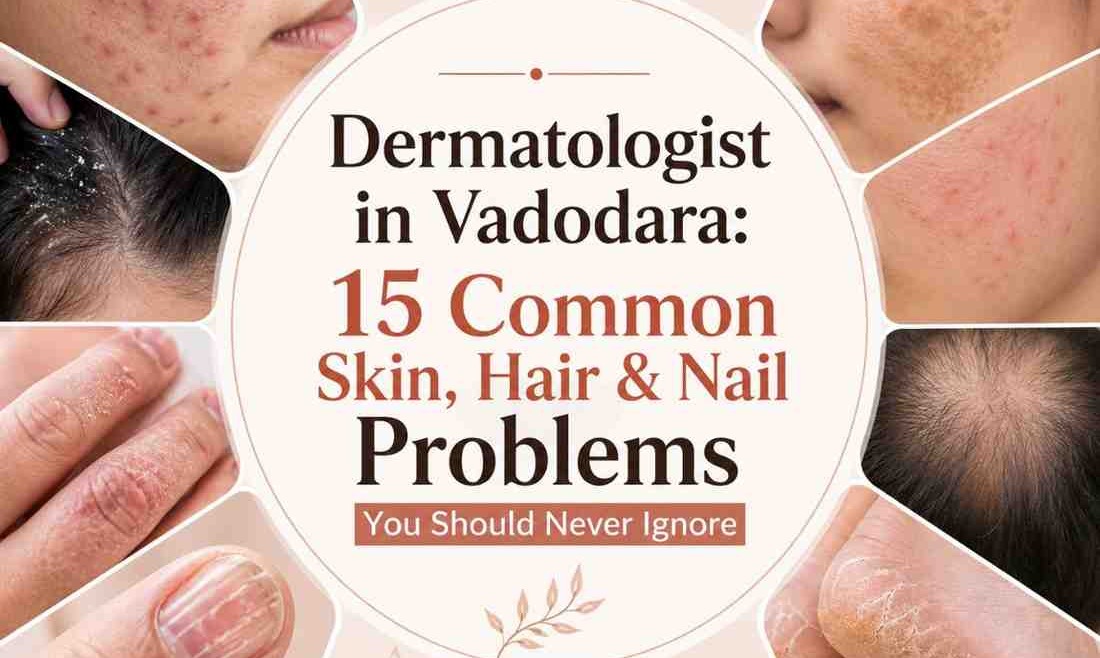
Your skin, hair, and nails often give early signs when something is not right. A little itching, sudden hair fall, repeated acne breakouts, or nail discoloration may look minor at first, but ignoring these symptoms can make the condition harder to treat later. Many people keep trying home remedies or switch products without understanding the real cause, which often delays proper treatment.
If you are dealing with persistent acne, pigmentation, dandruff, hair thinning, fungal infection, rashes, or unexplained nail changes, it may be time to consult a qualified Dermatologist in Vadodara. Early diagnosis can help prevent scarring, reduce discomfort, and improve treatment outcomes.
At TVAK Aesthetic & Laser Skin Clinic, we see many patients who initially ignore small skin or hair concerns until they begin affecting confidence, comfort, or day-to-day life. In this blog, we’ll look at 15 common skin, hair, and nail problems you should never ignore and when it’s best to seek expert care from the Best Dermatologist in Vadodara.
Why You Shouldn’t Ignore Skin, Hair & Nail Problems
Not every skin or hair concern is “just cosmetic.” Many common issues can be linked to hormonal changes, fungal infection, scalp inflammation, allergies, stress, nutritional deficiencies, or long-term skin barrier damage. When left untreated, these problems can become more stubborn, recurrent, or leave behind marks, pigmentation, hair thinning, or scarring.
Seeing an experienced dermatologist early can help with:
- Proper diagnosis instead of trial-and-error treatment
- Faster relief from itching, acne, scalp issues, and rashes
- Prevention of scars, dark spots, and worsening hair fall
- Personalised treatment based on your skin type and concern
- Safer guidance for treatments like PRP, chemical peels, lasers, Botox, and fillers
15 Common Skin, Hair & Nail Problems You Should Never Ignore
1. Persistent Acne
Acne that keeps coming back, feels painful, or starts leaving marks should not be ignored. Recurrent breakouts may be linked to oily skin, hormones, stress, or incorrect skincare. Early treatment can help control acne and reduce the risk of post-acne scars and pigmentation.
2. Acne Scars and Post-Pimple Marks
Even after acne settles, dark spots, pitted scars, and uneven texture can remain. These concerns often need targeted treatment rather than just regular creams. The earlier acne scars are assessed, the better the chances of improving texture and marks.
3. Pigmentation and Dark Spots
Uneven skin tone, melasma, tanning, and dark acne marks are common reasons people visit a skin clinic in Vadodara. Pigmentation can increase with sun exposure, hormonal changes, inflammation, or repeated irritation. A dermatologist can identify the cause and suggest the right treatment instead of relying on random brightening products.
4. Hair Fall
Some hair shedding is normal, but ongoing hair fall, thinning hair, or a widening partition should be taken seriously. Hair loss can be linked to stress, dandruff, thyroid issues, hormonal imbalance, nutritional deficiencies, or pattern hair loss. Timely treatment can help slow further hair thinning and support healthier regrowth.
5. Dandruff and Itchy Scalp
If dandruff keeps returning or is associated with itching, redness, or scalp flakes, it may be more than a simple dry scalp issue. Persistent dandruff can be related to seborrheic dermatitis, scalp inflammation, or fungal overgrowth. It may also contribute to discomfort and increased hair fall.
6. Fungal Infections
Fungal infections often show up as itchy red patches, scaling, or rashes in sweaty areas such as the groin, neck folds, underarms, or under the breast. These infections may spread or keep coming back if not treated properly. Repeated use of over-the-counter creams can sometimes worsen the condition.
7. Skin Allergy and Rashes
Sudden itching, redness, bumps, or irritation after using a product or due to sweat, weather, or unknown triggers should not be ignored if it keeps recurring. Allergic rashes and irritated skin often need proper diagnosis to identify triggers and calm inflammation safely.
8. Eczema and Dry, Irritated Skin
Dry, rough, itchy, or inflamed skin can sometimes point to eczema or skin barrier damage rather than simple dryness. If your skin feels sensitive, cracks easily, or keeps flaring up, it may need medical treatment along with the right skincare routine.
9. Psoriasis
Thick scaly patches on the scalp, elbows, knees, or body may be signs of psoriasis. This condition can sometimes be mistaken for dandruff or dry skin in the early stage. If left untreated, it can become more uncomfortable and difficult to manage.
10. Melasma
Melasma appears as patchy brown pigmentation, usually on the cheeks, forehead, upper lip, or nose. It is often triggered by sun exposure, hormones, or genetic tendency. Because melasma can worsen with the wrong creams or poor sun protection, it is best treated under dermatology guidance.
11. Warts, Skin Tags, and Small Skin Growths
Not every bump or skin growth is dangerous, but any growth that increases in size, gets irritated, or changes in appearance should be checked. Warts, skin tags, and similar lesions can often be treated safely once examined properly.
12. Nail Discoloration or Thickened Nails
Yellow, brittle, thick, painful, or discoloured nails can be signs of fungal infection, repeated trauma, or other nail disorders. Nail problems are often ignored for too long, but they can take time to treat and usually respond better when diagnosed early.
13. Product-Related Skin Reactions
Using too many skincare products, harsh active ingredients, or viral home remedies can trigger redness, burning, breakouts, and skin sensitivity. If your skin has become reactive after trying new products, it may be a sign of barrier damage or irritation that needs professional advice.
14. Excessive Sweating with Skin Irritation
Sweating itself is common, but if it leads to body-fold rashes, itching, fungal infection, or underarm irritation, it should not be ignored. Sweat-related skin problems can become recurrent, especially in hot and humid weather.
15. Any New Mole, Non-Healing Patch, or Unusual Skin Change
A mole that changes colour or shape, a rough patch that does not heal, or any skin lesion that keeps growing should be examined by a dermatologist. Not every change is serious, but unusual skin changes should always be evaluated rather than left unnoticed.
When Should You See a Dermatologist in Vadodara?
You should consider visiting a Dermatologist in Vadodara if:
- Your skin, hair, or nail issue has lasted for more than a few weeks.
- The problem keeps returning despite home remedies or over-the-counter products.
- Acne is leaving marks or scars.
- Hair fall is becoming more noticeable.
- Itching, fungal infection, or skin rashes are spreading.
- Pigmentation is worsening or becoming difficult to hide.
- A mole, patch, or skin growth looks different than before.
The earlier the diagnosis, the easier it often becomes to manage the condition before it progresses further.
Why Choose TVAK Aesthetic & Laser Skin Clinic?
At TVAK Aesthetic & Laser Skin Clinic, we focus on personalised skin and hair care backed by clinical evaluation and modern dermatology treatment options. Whether you are struggling with acne, pigmentation, hair fall, dandruff, fungal infection, scalp concerns, or aesthetic skin issues, our goal is to understand the root cause and recommend a treatment plan that is practical, safe, and suited to your skin type.
If you have been searching for the Best Dermatologist in Vadodara for medical or aesthetic skin concerns, timely consultation can help you avoid unnecessary delays and begin the right treatment with confidence.
Final Thoughts
Skin, hair, and nail concerns are easy to ignore in the beginning, especially when symptoms seem mild. However, repeated acne, persistent dandruff, fungal infection, pigmentation, hair fall, and unusual nail or skin changes often require more than temporary home care. Early diagnosis makes treatment more effective and helps prevent long-term problems such as scarring, dark spots, discomfort, or worsening hair loss.
If you are dealing with any of these concerns and want expert guidance, consulting a qualified Dermatologist in Vadodara can help you understand the cause and choose the right treatment for healthier skin, hair, and nails.
Frequently Asked Questions (FAQs)
1. When should I see a dermatologist in Vadodara?
You should see a dermatologist in Vadodara if you have acne, pigmentation, hair fall, dandruff, fungal infection, rashes, itching, or nail changes that do not improve within a few weeks. Early diagnosis helps prevent scarring, worsening symptoms, and repeated use of the wrong products.
2. What problems does a dermatologist treat?
A dermatologist treats skin, hair, scalp, and nail concerns such as acne, acne scars, pigmentation, melasma, fungal infection, eczema, psoriasis, dandruff, hair fall, skin allergies, nail infections, warts, and skin tags. Many dermatologists also offer advanced treatments like PRP, laser procedures, Botox, and fillers.
3. How do I choose the best dermatologist in Vadodara?
When choosing the best dermatologist in Vadodara, look for qualifications, experience, personalised treatment planning, and a clinic that handles both common skin problems and advanced treatments when needed. It also helps to choose a dermatologist who focuses on proper diagnosis rather than temporary symptom relief.
4. Can a dermatologist help with hair fall and dandruff?
Yes. A dermatologist can identify the reason behind hair fall, dandruff, scalp itching, and thinning hair. Depending on the cause, treatment may include scalp care, medication, PRP, or a personalised hair treatment plan.
5. Can a dermatologist treat pigmentation and acne scars?
Yes. Pigmentation, acne marks, melasma, and acne scars can be treated by a dermatologist after evaluating the cause, skin type, and severity. Treatment may include prescription creams, chemical peels, microneedling, PRP, or laser-based procedures depending on the concern.
6. Is it necessary to visit a dermatologist for fungal infection or skin allergy?
Yes, especially if the infection or allergy keeps coming back, spreads, causes intense itching, or does not improve with basic care. A dermatologist can diagnose the condition properly and recommend the right treatment instead of temporary relief creams that may worsen the problem.