
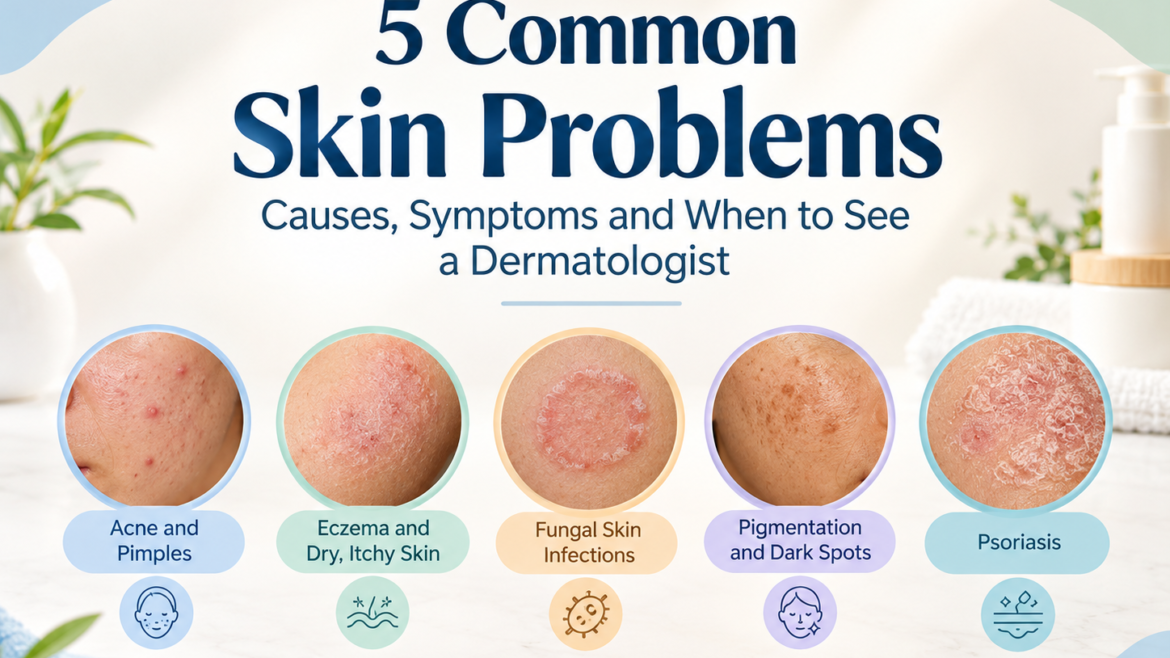
5 Common Skin Problems: Causes, Symptoms and When to See a Dermatologist
Skin problems can affect people of all ages. Some appear temporarily, while others return repeatedly or need medical treatment. Acne, eczema, skin infections, pigmentation and psoriasis are among the concerns that may lead people to seek dermatology advice.
Understanding the common signs of these conditions can help you decide when to seek professional assessment. However, similar symptoms can have different causes, so an online article cannot confirm a diagnosis.
Here are five common skin problems, their possible causes and when it may be useful to consult a dermatologist.
1. Acne and Pimples
Acne develops when hair follicles become blocked with oil and dead skin cells. Inflammation and the activity of acne-associated bacteria can contribute to the condition.
Common Symptoms
Acne may appear as blackheads, whiteheads, red pimples, pus-filled spots or deeper, painful lesions. It commonly affects the face, chest, shoulders and back.
Hormonal changes, genetics, certain medicines and other factors can influence acne. Picking or squeezing spots may increase inflammation and the risk of scarring.
What Can Help?
Gentle cleansing, non-comedogenic skincare and avoiding repeated picking may help support skin health. Persistent, painful or scarring acne may require medical treatment. Consulting dermatologists in Vadodara can help you understand the severity of acne and explore suitable treatment options, which may include topical medicines, oral medication or selected procedures depending on your individual condition.
2. Eczema and Dry, Itchy Skin
Eczema is a group of inflammatory skin conditions that can cause dryness, itching and irritation. Atopic dermatitis is one common type. Contact dermatitis can also cause an itchy or inflamed reaction after exposure to an irritant or allergen.
Common Symptoms
Symptoms may include dry patches, redness, itching, scaling and irritated skin. Scratching can damage the skin and sometimes lead to secondary infection.
Eczema can flare up repeatedly. Triggers vary from person to person and may include particular soaps, fragrances, environmental factors or other irritants.
What Can Help?
Using a suitable fragrance-free moisturiser and avoiding known irritants may help manage dryness. Persistent or severe symptoms may require prescribed treatment.
If you have recurring itching or a rash that does not improve, a dermatologist can assess the possible cause and recommend an appropriate management plan.
3. Fungal Skin Infections
Fungal infections can affect different parts of the body, including the feet, groin, body folds and scalp. The symptoms vary according to the organism and the area involved.
Common Symptoms
A fungal skin infection may cause an itchy, scaly or spreading rash. Some infections form ring-shaped patches, while others cause changes between the toes or in skin folds.
Not every circular or itchy rash is fungal. Eczema and other skin conditions can look similar, so treatment should not be selected based on appearance alone.
What Can Help?
Keeping affected areas clean and dry may help reduce moisture-related irritation. Avoid sharing personal items such as towels when an infection may be contagious.
A medical professional can assess the symptoms and recommend an appropriate antifungal treatment when indicated. Avoid using steroid-containing combination creams without medical advice, as inappropriate use can worsen or mask some fungal infections.
4. Pigmentation and Dark Spots
Pigmentation refers to changes in skin colour caused by differences in melanin production or distribution. Dark spots may appear after inflammation, acne, sun exposure or other skin changes.
Melasma is another pigmentation condition that often causes brown or grey-brown patches, particularly on the face.
Common Symptoms
People may notice uneven skin tone, isolated dark marks or larger patches. The pattern, location and progression can provide useful clues, but a clinical assessment may be necessary to determine the cause.
What Can Help?
Sun protection is an important part of managing many pigmentation concerns. A suitable sunscreen, protective clothing and avoiding excessive sun exposure may help reduce further darkening.
Depending on the diagnosis, a dermatologist may discuss topical treatments or selected procedures. Results vary, and some conditions, including melasma, may require ongoing management.
5. Psoriasis
Psoriasis is a chronic inflammatory skin disease associated with changes in the skin’s renewal process. It is not simply dry skin and is not contagious.
Common Symptoms
Psoriasis may cause clearly defined, raised patches with scaling. The scalp, elbows, knees and other areas can be affected. Some people also develop nail changes or joint symptoms.
The condition can fluctuate over time, with periods when symptoms improve and periods when they flare up.
What Can Help?
Treatment depends on the type, extent and severity of psoriasis. A dermatologist can assess the condition and discuss appropriate options, which may include topical medicines, phototherapy or other prescribed treatments.
Seek medical advice if you suspect psoriasis, particularly if symptoms are extensive, painful or associated with joint discomfort.
When Should You See a Dermatologist?
Consider consulting a dermatologist when a skin problem:
- Persists or repeatedly returns.
- Becomes more widespread or severe.
- Causes significant itching, pain or discomfort.
- Does not improve with appropriate basic care.
- Leaves scars or persistent pigmentation.
- Involves a new or changing skin growth.
- Is accompanied by other symptoms that concern you.
Seek prompt medical attention for rapidly spreading redness, severe pain, fever associated with a rash, or signs of a serious allergic reaction.
Understanding what does a dermatologist do can help you recognise when a skin, hair or nail concern needs professional assessment. A dermatologist evaluates symptoms, medical history and relevant triggers before recommending an appropriate treatment plan.
How Can a Dermatologist Help?
A dermatologist considers the appearance of the affected skin, the duration of symptoms, medical history and any treatments already tried. Depending on the findings, the doctor may recommend an examination, additional tests, medication, skincare measures or a selected procedure.
This matters because several skin conditions can look similar but need different treatments. Using an unsuitable cream or repeatedly trying home remedies may delay appropriate care.
Choosing a Skin Clinic in Vadodara
When selecting a clinic, check the dermatologist’s qualifications, experience with your concern, the explanation of available treatment options and the follow-up process. You should feel comfortable discussing your symptoms and asking questions about the benefits, risks and expected course of treatment.
Knowing the factors involved in choosing the right skin specialist can help you make a more informed decision about your skin care.
If you are looking for a dermatologist in Vadodara, Dr. Namrata Shukla at TVAK Aesthetic, Dermatology & Laser Skin Clinic provides assessment and care for a range of skin concerns. The appropriate treatment depends on your symptoms and individual needs.
Frequently Asked Questions
1. What are the five most common skin problems?
Common skin concerns include acne, eczema, fungal skin infections, pigmentation disorders and psoriasis. Their prevalence varies by population, age and other factors, and these conditions are not the only reasons to seek dermatology care.
2. Which doctor should I consult for skin problems?
A qualified dermatologist is generally the appropriate specialist for persistent or unexplained skin conditions. A general physician may also assess new symptoms and refer you when necessary.
3. When should I see a dermatologist for acne?
Consider a consultation if acne is painful, severe, persistent, leaving scars or not responding to appropriate basic care.
4. What causes recurring skin rashes?
Recurring rashes may be related to eczema, contact dermatitis, infections or other conditions. The cause cannot always be identified by appearance alone, so persistent symptoms may need medical assessment.
5. Can a fungal skin infection be treated at home?
Basic hygiene and keeping affected areas dry may help, but they do not replace appropriate treatment. If a fungal infection is suspected, a medical professional can assess the condition and recommend suitable treatment.
6. Is psoriasis contagious?
No. Psoriasis is an inflammatory skin disease and does not spread from person to person through ordinary contact.
7. What causes pigmentation and dark spots?
Possible causes include sun exposure, post-inflammatory changes, hormonal factors and conditions such as melasma. The appropriate treatment depends on the underlying cause.
8. Can eczema go away permanently?
Eczema varies between individuals. Some people experience long periods with few symptoms, while others have recurring flare-ups that need ongoing management.
9. When is a skin rash an emergency?
Seek emergency care for a rash associated with breathing difficulties, swelling of the tongue or throat, or other signs of a severe allergic reaction. A rapidly spreading rash with fever or significant pain also needs prompt medical assessment.
10. Can a dermatologist treat several skin conditions?
Yes. Dermatologists assess a wide range of skin diseases and other concerns, including acne, eczema, psoriasis, pigmentation and many infections. Treatment is selected according to the diagnosis and individual needs.

