The monsoon season is a refreshing break from the heat — but for your hair, it can be a time of frizz, excessive hair fall, dandruff, and dullness. Increased humidity, rainwater exposure, and poor scalp hygiene during this time can significantly damage hair health.
At Tvak Skin Clinic, Vadodara, we see a spike in patients facing hair problems during the rainy months. This blog will help you understand why your hair suffers during monsoon and how you can keep it healthy, strong, and frizz-free.

💧 Why Does Hair Get Worse During Monsoon?
The unique combination of moisture, sweat, pollution, and scalp oil creates a perfect storm for hair issues during the rainy season. Here’s what happens:
- Humidity makes the scalp oily and hair limp
- Sweat mixes with oil and dirt, clogging scalp pores
- Rainwater carries pollutants that irritate the scalp
- Increased fungal infections lead to dandruff and itching
- Hair becomes more porous, absorbing moisture and becoming frizzy
🧴 7 Dermatologist-Recommended Hair Care Tips for Monsoon

1. 🧼 Keep Your Scalp Clean
- Wash your hair 2–3 times a week with a mild, sulfate-free shampoo.
- If your hair gets wet in the rain, wash it immediately to remove any acidic or polluted water.
💡 Tip: Use lukewarm water to wash your hair — hot water can strip away natural oils and worsen dryness.

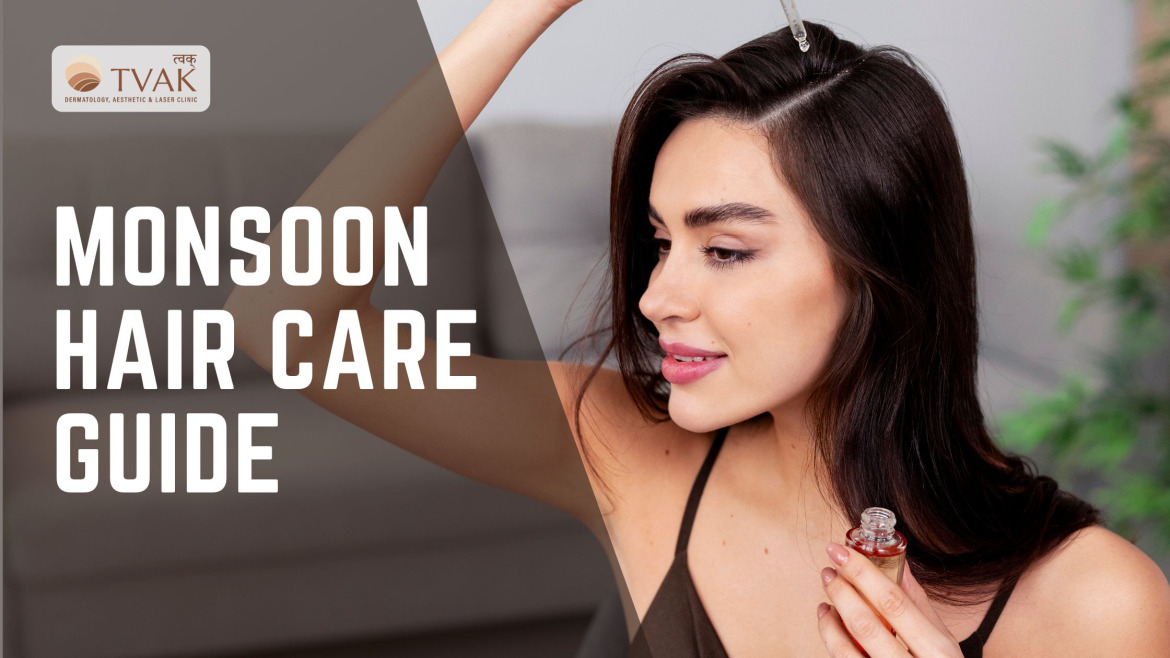
2. 🌿 Oil Your Hair Smartly
Oiling nourishes the scalp but doing it the wrong way can backfire during monsoon.
- Use light oils like almond, coconut, or jojoba
- Keep oil on for 30–60 minutes, not overnight
- Always follow up with a shampoo to clean the scalp
Avoid heavy or sticky oils that can clog the pores and worsen scalp issues in humidity.

3. 🚫 Avoid Tight Hairstyles
Tight ponytails or buns trap moisture, weaken the roots, and may lead to hair breakage.
- Stick to loose braids or buns
- Avoid tying your hair when it’s wet
- Use fabric scrunchies instead of rubber bands to reduce tension

4. 🌀 Don’t Leave Hair Wet for Long
Wet hair is fragile and prone to breakage.
- Pat dry with a microfiber towel
- Allow your hair to air dry — avoid using high-heat blow dryers
- Comb only after it’s 80% dry using a wide-tooth comb

5. 🥗 Eat a Hair-Friendly Diet
What you eat is just as important as what you apply.
Include in your daily diet:
- Protein-rich foods (eggs, paneer, dals)
- Biotin (almonds, spinach, sweet potatoes)
- Zinc and Iron (seeds, leafy greens)
- Omega-3 fatty acids (walnuts, chia seeds)
If you’re experiencing excess hair fall, consult a dermatologist for blood tests or supplements.

6. ✂️ Trim Split Ends
Humidity can make split ends worse, leading to frizz and a dull appearance.
- Trim your hair every 6–8 weeks
- Avoid over-styling with heat tools
- Use leave-in serums or conditioners to protect ends
7. ⚠️ Don’t Trust Rainwater Remedies
There’s a common myth that rainwater is pure and good for hair — but in reality, it may carry pollutants, bacteria, and dust particles from the atmosphere.
If your hair gets drenched in rain:
- Dry it immediately
- Shampoo as soon as possible to cleanse out impurities

🧪 What to Do If You Still Experience Hair Fall?
If despite following all precautions you’re facing:
- Excessive hair fall
- Scalp itching or dandruff
- Sudden thinning of hair
👉 It’s time to consult a dermatologist.
At Tvak Skin Clinic, we offer personalised treatments like:
- Scalp analysis
- PRP (Platelet Rich Plasma) therapy
- Anti-fungal treatments
- Nutritional guidance for hair restoration
👩⚕️ Final Thoughts from Tvak Skin Clinic
Monsoon is a beautiful season — don’t let hair fall ruin it. With a combination of correct care, right products, and expert advice, your hair can stay healthy and shiny all year round.
📍For personalised consultations or to explore advanced hair treatments, visit us or book and appointmen today at Tvak Skin Clinic, Vadodara.